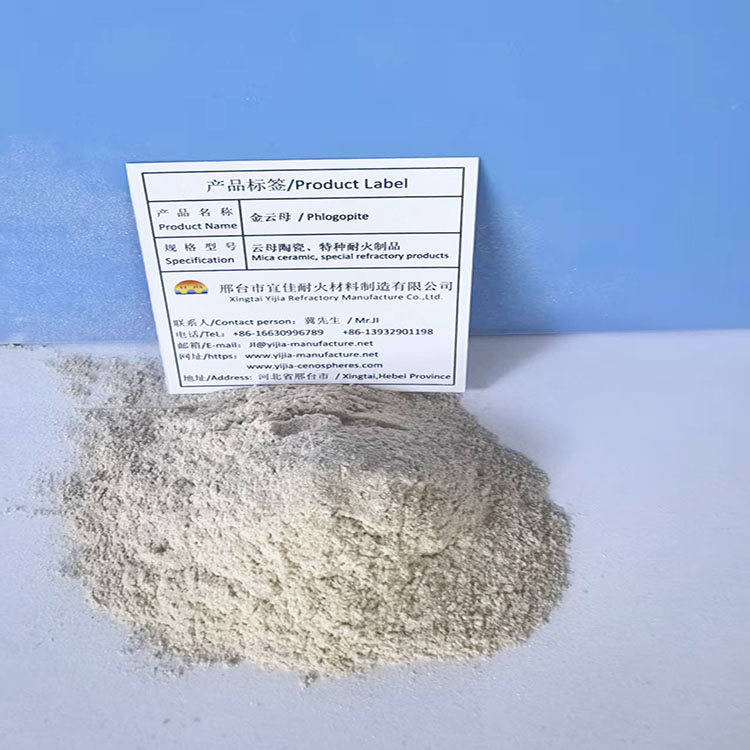
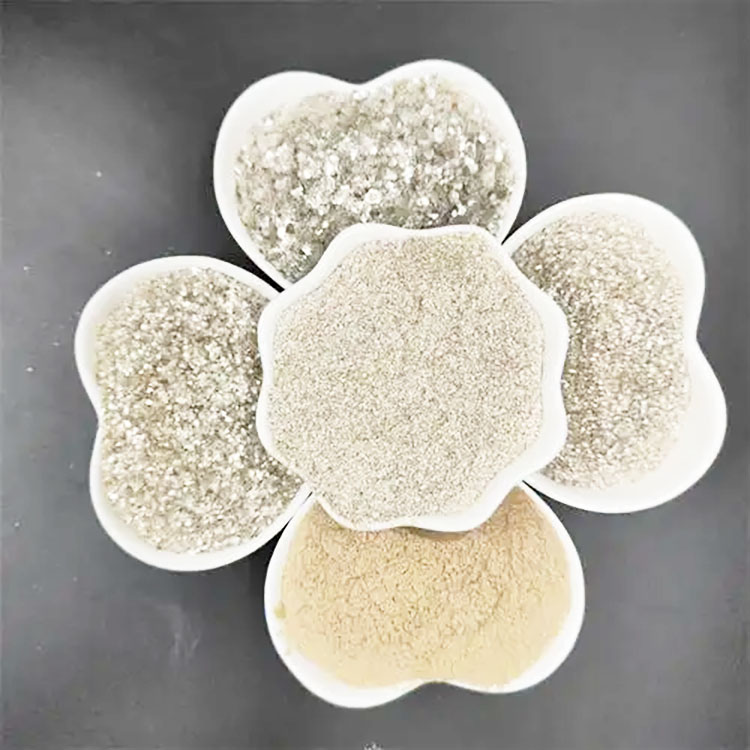
Phlogopite is a magnesium-containing phyllosilicate mineral belonging to the muscovite group. Often appearing golden, reddish-brown or light brown, it is also called "magnesium biotite" or "amber mica". Compared with muscovite, its distinctive features are higher heat resistance and excellent thermal stability, making it a key raw material for special refractory products in high-temperature harsh environments and mica ceramics with unique properties.
-
Excellent high-temperature resistance: Maximum service temperature reaches 1000~1100℃, much higher than muscovite (about 600℃), with a melting point of 1360~1400℃.
-
Superior thermal stability and low thermal expansion coefficient: Small volume change at high temperatures, with anisotropic thermal expansion coefficient (higher perpendicular to the cleavage plane, lower in-plane), but overall excellent thermal stability.
-
Outstanding thermal shock resistance: One of its most favored properties, capable of withstanding severe temperature fluctuations without cracking.
-
Good electrical insulation: Maintains excellent insulation performance even at high temperatures, with high volume resistivity.
-
Chemical stability: Resists most acids, alkalis and chemical slags, especially strong resistance to fluoride erosion.
-
Processability and layered structure: Features complete cleavage planes, easy to peel into elastic and tough flakes, which is the basis for manufacturing machinable ceramics.
As a functional additive or main aggregate, phlogopite is used in:
-
Continuous casting refractories: Such as long nozzles, submerged entry nozzles, stoppers, etc.
-
Non-ferrous metal smelting refractories: Furnace linings and launders for smelting copper, aluminum, lead, zinc and their alloys.
-
Refractories for special glass furnaces.
-
Thermal insulation linings for high-temperature kilns.
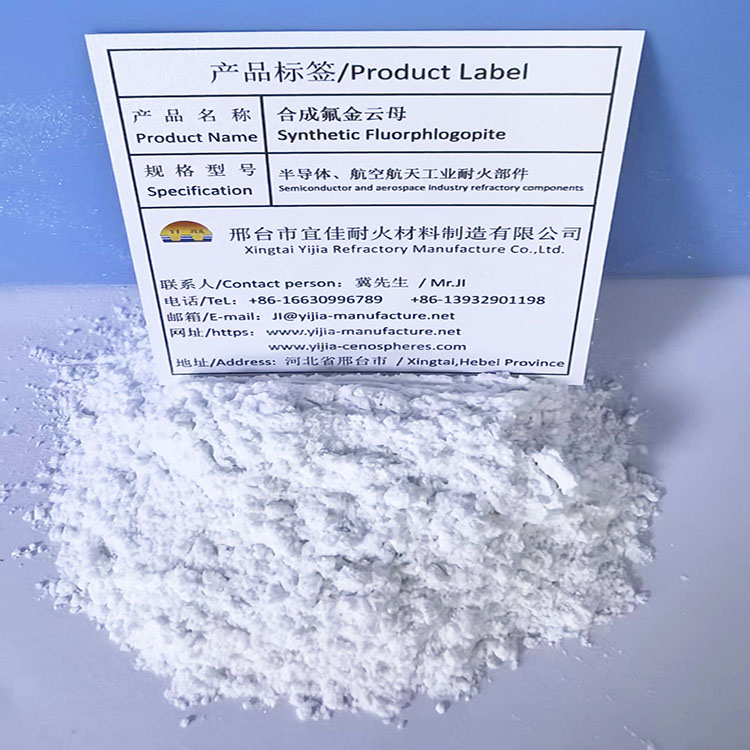
Mica ceramics are composed mainly of synthetic fluorophlogopite or natural phlogopite grains, combined with specific glass phases or ceramic binders via controlled crystallization or sintering, integrating the properties of ceramics and phlogopite.
-
Machinable ceramics: Its most notable feature. The material consists of numerous interlaced flaky phlogopite crystals. During machining (turning, milling, drilling, planing, etc.), tool stress causes micro-deflection and branching of cracks along mica cleavage planes, removing material by "peeling" instead of brittle fracture like traditional ceramics.
-
High-performance attributes: High-temperature resistance, thermal shock resistance, excellent electrical insulation, and vacuum tightness.
-
Electrical and electronic: Insulating components for high-voltage switches, vacuum electronic devices, semiconductor manufacturing equipment brackets, microwave windows.
-
Aerospace: Radar radomes, high-temperature observation windows, insulating components for missile nose cones.
-
Precision instruments: Heat-resistant, insulating and complex-shaped measuring instrument parts, thermal instrument insulation brackets.
-
High-temperature fields: Sensor protection sleeves for molten metal transportation, heat treatment fixtures, etc.





 邢台市宜佳
邢台市宜佳 邢台市宜佳
邢台市宜佳
 Lankecms